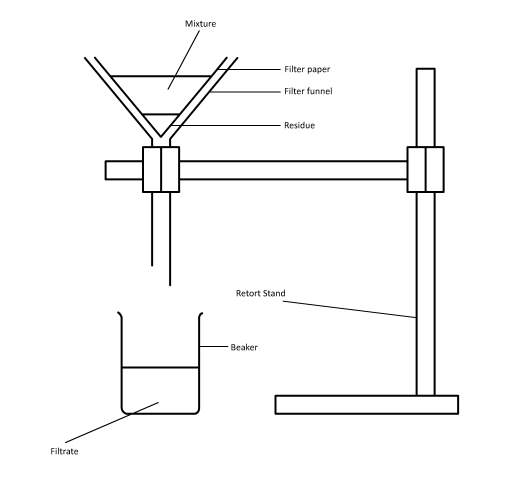
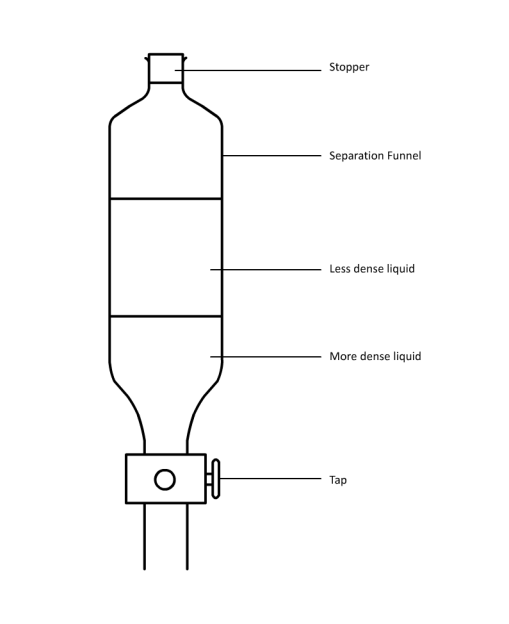
is the required drawing of the different diagram.
Key things are:
- draw and remember to label them
- describe the process of the experiment of that apparatus
- describe the use of the set- up
FILTRATION
SEPARATION FUNNEL
SIMPLE DISTILLATION
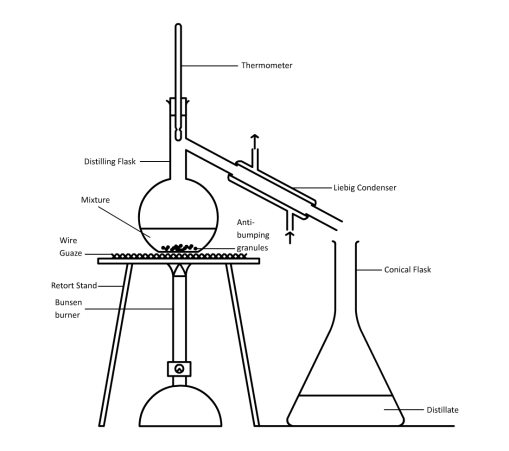

is the required drawing of the different diagram.


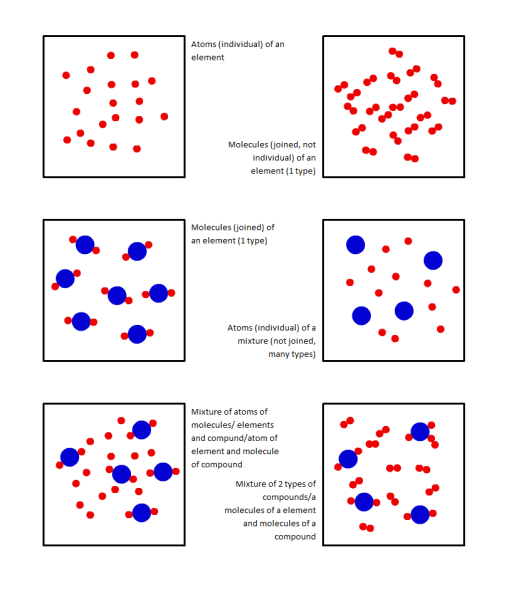
Here is the basics
On Thursday, Ms Nada taught us on how to draw a simple animal and plant cell. Th difficult task was trying to draw a circle without Ms Nada being able to see where the person started from. It was so though that we had to do a lot of practice before we got it right. Also she did not want to see fuzzy lines, too small, too big and lines coming out.
Density :
Mass/volume = density
to find density of irregular :
1.weigh the irregular solid to find its mass(M)
2. fill the measuring cylinder 1/3 with water(V1)
3. tie a string to the irregular solid and lower it into the water(V2)
Note : use a sinker if irregular solid floats
4. The volume of the irregular solid is (V1 - V2)
5. Take the mass and divide by the volume to find the density of the irregular solid.
Kinetic particle theory
The bunsen burner has 5 main parts.
1. Barrel - to raise the flame to a suitable height
2. Collar - to regulate the amount of air entering the air hole
3. Air hole - to allow air to enter
4. Jet - to enable gas to rush out
5. Base - to support the bunsen burner
- Gas Tap - to control the size of the flame
Types of flames:
Luminous
- orange in colour
- flame flickering and unsteady
- gas not burnt completely
- air holes are closed and very little air is allowed to mix with the gas
- not very hot
- carbon particles are deposited on apparatus
Non-luminous
- blue in colour
-flame burns steadily
- gas burnt completely
- hotter than luminous flame
- hottest part is above the tip at the blue zone
- air holes are open allowing air into the bunsen burner
(used in the lab for heating)
STRIKE BACK !
> occurs when too much air entering the air hole
> the gas burns at the jet
> turn of gas tap immediately and inform the teacher( do not touch any part of the bunsen burner)
Heating liquid in beaker:
1. put the wire gauze on the tripod stand
2. put the beaker of liquid on the wire gauze
3. light the bunsen burner and push it under the tripod stand
Heating liquid in the test tube:
1. hold test tube with test tube holder
2. ensure mouth of test tube is no pointing at anyone
3. slant the test tube of about 45 degrees
4. heat the test tube by moving it through the hotest part of the flame
5. liquid should be about one third of the test tube
Danger symbols:
This website would show you the danger symbols and what they mean.
Science lab danger symbols!
Apparatus in the lab:
This website shows you all the lab apparatus used
Lab apparatus!